Best AI Copywriting Tools For High CPC Niches Uncovered
Best AI Copywriting Tools For High CPC Niches opens the door to understanding how artificial intelligence is reshaping the landscape of copywriting in lucrative markets. With the rise of digital marketing, harnessing AI tools can dramatically enhance your content’s effectiveness, leading to higher conversion rates and increased revenue potential.
This exploration unveils what AI copywriting tools are, emphasizing their significance in high CPC niches. These tools leverage advanced algorithms to create compelling content that resonates with target audiences, ultimately driving better results for advertisers and marketers alike.
Overview of AI Copywriting Tools
AI copywriting tools are software applications that utilize artificial intelligence to create, edit, and optimize written content across various formats. These tools leverage natural language processing and machine learning technologies to generate high-quality text that resonates with target audiences. With the growing importance of content marketing, these tools serve as valuable assets for businesses, marketers, and content creators who seek to enhance their writing efficiency and effectiveness.The significance of utilizing AI in high CPC (cost-per-click) niches cannot be understated.
High CPC niches often involve competitive markets where every word counts in terms of engagement and conversion. By employing AI copywriting tools, businesses can produce compelling ad copy, landing pages, and other promotional materials that are tailored to drive high engagement rates. The benefits include time savings, improved content quality, and the ability to analyze vast amounts of data to optimize messaging strategies.
Key Features of Effective AI Copywriting Tools
When evaluating AI copywriting tools, certain features distinguish the best in the market. Understanding these characteristics can help users choose the right tool for their needs. The following key features are paramount:
- Natural Language Generation: The tool should be able to produce coherent and contextually relevant text that sounds human-like.
- Optimization: High-performing tools will offer suggestions for s, headings, and structure to improve search engine visibility.
- Multi-format Support: These tools should be capable of generating various types of content, including blog posts, ad copy, social media updates, and email marketing content.
- Customization Options: Users should be able to adjust the tone, style, and intent of the output to match their brand voice.
- Analytics and Performance Tracking: Integration of analytics tools allows users to measure the effectiveness of the generated content in real-time.
The integration of these features ensures that AI copywriting tools not only save time but also enhance the overall quality and effectiveness of marketing content. As businesses aim to maximize their return on investment in high CPC niches, these tools provide a strategic advantage in crafting persuasive and engaging copy that drives conversions.
Top AI Copywriting Tools for High CPC Niches
In the competitive landscape of high CPC niches, effective copywriting can significantly influence your advertising success. AI copywriting tools have emerged as essential allies for marketers looking to enhance their content creation process. These tools leverage advanced algorithms to generate compelling copy that captures attention and drives conversions, ultimately optimizing advertising spend.Among the plethora of AI copywriting tools available today, a few stand out for their unique features, ease of use, and proven effectiveness in high CPC niches.
This section explores the top tools currently available, comparing their functionalities and showcasing user testimonials that highlight their impact.
Leading AI Copywriting Tools
When selecting an AI copywriting tool, understanding the features and benefits of each can guide your decision. Here’s a comprehensive overview of some of the best tools tailored for high CPC niches:
| Tool Name | Key Features | Pricing | User Feedback |
|---|---|---|---|
| Jasper AI | Content templates, integration, tone adjustment | Starting at $29/month | “Incredible for generating blog posts and ads!” |
| Copy.ai | Multiple language support, headline generation, marketing copy assistance | Starting at $35/month | “Saves hours on copywriting tasks!” |
| Writesonic | Long-form content, AI article writer, plagiarism checker | Starting at $15/month | “High-quality output that feels human!” |
| AdZis | Product description generator, e-commerce focus, multi-platform sharing | Starting at $49/month | “Perfect for e-commerce businesses, highly recommend!” |
| Rytr | Content generation in 30+ languages, tone settings, plagiarism checker | Starting at $9/month | “Super easy to use and affordable!” |
User testimonials illuminate the effectiveness of these tools. For instance, one user stated about Jasper AI,
“This tool transformed my copywriting process. I’ve seen a 50% increase in click-through rates on my ads after using it.”
Similarly, a case study on Writesonic revealed that a digital marketing agency significantly cut down content creation time by 70%, allowing them to focus on strategy rather than execution.These tools not only enhance writing efficiency but also improve the overall quality of content, making them essential for marketers focused on high CPC niches. By leveraging AI technology, businesses can ensure they produce engaging and persuasive copy that resonates with their audience and drives results.
Factors Influencing CPC in Different Niches: Best AI Copywriting Tools For High CPC Niches
Source: infidigit.com
In the world of digital advertising, Cost-Per-Click (CPC) can vary significantly across different niches. Understanding these variations is crucial for advertisers aiming to maximize their return on investment (ROI). Several factors contribute to these differences, which can ultimately influence how much a business is willing to pay for clicks in their respective markets.Various elements play a role in the fluctuations of CPC, including competition level, target audience demographics, and seasonal trends.
In highly competitive niches, advertisers often find themselves bidding more aggressively, which drives up the CPC. Conversely, niches with less competition typically offer lower CPCs. Additionally, the specific audience targeted can also impact CPC; for instance, affluent demographics may command higher bids due to their purchasing power. Seasonal trends, such as holidays or events, can further skew CPC as advertisers ramp up spending during peak times to capture consumer interest.
Impact of Copywriting on CPC, Best AI Copywriting Tools For High CPC Niches
Effective copywriting can significantly influence CPC by enhancing ad relevance and click-through rates. Advertisers who invest in well-crafted copy can create ads that resonate with their target audience, leading to increased engagement. Higher engagement rates typically result in lower CPC, as platforms like Google Ads reward ads that achieve better performance with lower bidding costs.When copywriting effectively addresses the pain points and desires of the target audience, it not only attracts more clicks but also tends to boost conversion rates.
This performance improvement signals to advertising platforms that the ad is valuable, which can lower the overall CPC. For instance, a financial service offering a tailored solution through compelling copy can attract clicks from users genuinely interested in their services, thereby reducing the cost per click due to elevated relevance and quality scores.
High CPC Niches and Their Lucrative Nature
Certain niches are known for their high CPC rates, primarily due to the lucrative nature of the services or products offered. Some of the most notable high CPC niches include finance, legal services, and healthcare. These areas often require significant investment for customer acquisition, justifying the higher CPC.
1. Finance
The finance niche encompasses a range of services from loans to investment advice. The potential returns on investment in this sector can be substantial, leading advertisers to bid higher for clicks to secure quality leads. For example, s related to personal loans or mortgage refinancing often have CPCs exceeding $50 due to the high value of converting a single lead.
2. Legal Services
Lawyers and legal firms often experience high CPC for similar reasons. With potential case values in the thousands or even millions, advertisers are willing to pay premium rates to attract clients. s related to personal injury or divorce lawyers frequently command CPCs in excess of $100, making this one of the most competitive niches.
3. Healthcare
The healthcare sector, particularly in areas like cosmetic surgery, also demonstrates high CPC trends. The potential lifetime value of a patient can justify high advertising expenditures. For instance, s associated with elective surgeries can see CPCs ranging from $30 to $80, depending on the specific services marketed.In summary, understanding the factors influencing CPC across different niches is essential for advertisers looking to optimize their campaigns.
Effective copywriting and knowledge of high CPC niches can significantly enhance advertising performance.
Techniques for Effective Copywriting
Source: digitalutilization.com
Crafting compelling copy is essential for achieving high conversion rates, especially in high CPC niches. Utilizing AI copywriting tools can significantly enhance the quality and effectiveness of your writing, allowing you to connect with your audience more effectively and drive meaningful actions.To write persuasive copy, it is crucial to apply specific techniques that resonate with your target audience and compel them to take action.
Understanding these techniques can elevate your writing and optimize the performance of your campaigns.
Best Practices for Writing Persuasive Headlines
Headlines serve as the first impression and can determine whether a reader engages with your content. Here are some best practices for crafting impactful headlines:
- Incorporate numbers and statistics, as they convey specificity and attract attention (e.g., “5 Ways to Boost Your Revenue”).
- Utilize strong, action-oriented verbs to inspire readers to take action (e.g., “Unlock,” “Discover,” “Transform”).
- Create a sense of urgency or exclusivity to encourage immediate action (e.g., “Limited Time Offer,” “Join Now Before It’s Too Late”).
- Utilize emotional language that resonates with your audience’s desires and pain points (e.g., “Free Yourself from Debt”).
- Use questions to pique curiosity and engage readers (e.g., “Are You Making These Common Mistakes?”).
Importance of Target Audience Understanding in Copywriting
Knowing your target audience is pivotal for effective copywriting. It shapes the tone, style, and content of your message, ensuring it resonates with the intended demographic. Understanding your audience’s needs, preferences, and pain points allows you to tailor your copy for maximum engagement and conversion.By leveraging AI tools, you can analyze audience data and gain insights into their behaviors and preferences.
This information can be transformed into actionable strategies that enhance the effectiveness of your copy. For instance, segmenting your audience based on demographics or interests enables personalized messaging that speaks directly to each group, enhancing relatability and response rates.
“Effective copywriting is not just about writing well; it’s about knowing your audience and delivering a message that resonates with them.”
Integrating AI Copywriting Tools into Marketing Strategies
Source: semrush.com
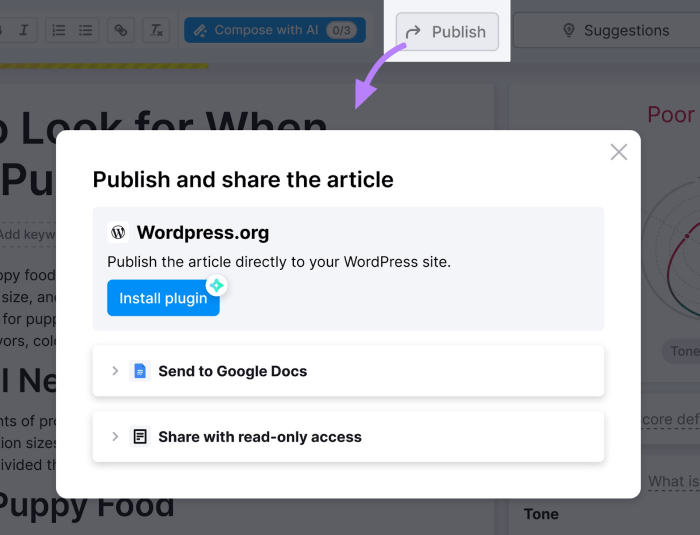
Incorporating AI copywriting tools into your existing marketing strategies can elevate your campaigns, making them more efficient and effective. By leveraging AI technology, businesses can streamline content creation, enhance customer engagement, and ultimately drive conversions. This integration process requires careful planning and execution to ensure that the AI tools complement your marketing efforts seamlessly.To integrate AI tools into your marketing framework, a structured approach is vital.
Follow these steps for a smooth transition and successful adoption of AI copywriting solutions.
Step-by-Step Integration Process
Begin by taking the following steps to incorporate AI copywriting tools into your marketing strategy effectively:
1. Assess Your Current Marketing Strategy
Understand your existing processes, identify gaps, and determine how AI can optimize them. This assessment will help pinpoint specific areas where AI can provide the most value.
2. Select the Right AI Tool
Research and choose an AI copywriting tool that aligns with your marketing goals and budget. Look for features that support your content needs, such as optimization, tone adjustments, and language capabilities.
3. Train Your Team
Provide training sessions for your marketing team to familiarize them with the AI tool’s functionalities. Ensure they understand how to leverage its features to create compelling content efficiently.
4. Pilot Test
Start with a small-scale pilot project using the AI tool. Monitor its performance and gather feedback from your team on usability and output quality. This step will provide insights into how well the tool fits into your overall strategy.
5. Evaluate and Optimize
Analyze the results from the pilot test, making necessary adjustments to integrate the AI tool fully into your marketing processes. Use metrics such as engagement rates, conversion rates, and content quality assessments to evaluate its impact.
6. Scale Up
Once you’re satisfied with the results, expand the usage of the AI tool across various marketing channels, including email campaigns, social media, and website content. Ensure that your team continues to adapt and optimize their approach based on ongoing performance data.
Examples of Successful Marketing Campaigns Using AI Copywriting
Numerous brands have effectively integrated AI copywriting tools into their marketing strategies, resulting in notable success.
Netflix
Leveraging AI, Netflix uses personalized content recommendations and innovative copywriting to engage users. Their AI analyzes viewer preferences and behaviors, enabling the platform to create tailored marketing content that resonates with different audience segments.
Copy.ai
This AI tool itself has been utilized in various marketing campaigns, helping businesses generate creative and engaging content. For instance, a startup used Copy.ai to craft compelling ad copy and social media posts, resulting in a significant increase in user engagement and conversion rates.
HubSpot
HubSpot employs AI in its marketing strategies to analyze customer data and produce personalized email content. By automating the content creation process, they’ve improved open rates and click-through rates, demonstrating the effectiveness of AI-driven marketing initiatives.The integration of AI copywriting tools not only streamlines content creation but also enhances the quality of marketing communications, leading to better audience engagement and higher conversion rates.
Measuring the Success of AI-Generated Copy
In the rapidly evolving landscape of digital marketing, understanding the effectiveness of your AI-generated copy is crucial for maximizing returns, especially in high CPC niches. Measuring success involves a strategic approach to identifying what works and what doesn’t, enabling marketers to refine their content for optimal performance.To effectively evaluate the impact of AI-generated copy, it is essential to establish key performance indicators (KPIs).
These metrics provide valuable insights into how well the content resonates with the target audience and drives desired actions.
Key Performance Indicators for Evaluating Copy Effectiveness
The following KPIs are instrumental in assessing the performance of AI-generated copy in high CPC niches:
- Click-Through Rate (CTR): This metric measures the percentage of users who click on a link in your copy compared to the number of impressions. A higher CTR often indicates compelling copy that drives interest.
- Conversion Rate: This reflects the percentage of visitors who complete a desired action (such as making a purchase or signing up) after engaging with your copy.
- Engagement Rate: This includes likes, shares, comments, and overall interaction with the content, highlighting how much the audience is connecting with the message.
- Bounce Rate: A high bounce rate may indicate that the copy did not meet visitors’ expectations or that it was not engaging enough to keep them on the page.
- Return on Ad Spend (ROAS): This measures the revenue generated for every dollar spent on advertising, providing a clear picture of the financial effectiveness of your copy.
It is important to track these metrics consistently over time to understand trends and patterns in performance.
Metrics Table for High CPC Niches
To facilitate a clearer understanding, the following table summarizes the critical metrics that matter in high CPC niches:
| Metric | Description | Importance in High CPC Niches |
|---|---|---|
| Click-Through Rate (CTR) | Percentage of users who click on a link in your copy | Indicates how well the copy captures attention |
| Conversion Rate | Percentage of visitors who complete a purchase or sign-up | Directly impacts revenue generation |
| Engagement Rate | Level of audience interaction with the content | Reflects audience interest and relevance |
| Bounce Rate | Percentage of visitors who leave the site without interaction | Indicates content effectiveness and user satisfaction |
| Return on Ad Spend (ROAS) | Revenue generated for every dollar spent | Measures financial success of the copy |
For tracking and analyzing performance, various methods can be implemented. Utilizing analytics tools like Google Analytics allows marketers to monitor the aforementioned KPIs in real time. Setting up conversion tracking can help identify which pieces of copy lead to the highest conversion rates. Additionally, A/B testing allows for experimentation with different copy variations to determine which performs best in terms of engagement and conversion.
“The right metrics provide the foundation for informed decisions, allowing marketers to optimize their strategies continuously.”
These strategies not only enhance the effectiveness of AI-generated copy but also contribute significantly to achieving higher returns in high CPC niches, making data-driven adjustments easier and more impactful.
Future Trends in AI Copywriting
As we move deeper into the digital age, the landscape of copywriting is evolving rapidly, influenced by advancements in artificial intelligence. These changes are not only redefining how content is created but also reshaping the skills and techniques that copywriters will need to thrive in high CPC niches. Emerging technologies promise to enhance the writing process, making it faster and more efficient while opening up new possibilities for personalization and engagement.One significant trend is the increasing sophistication of natural language processing (NLP) technologies.
AI tools are becoming better at understanding context, tone, and audience preferences, allowing for more nuanced content generation. This evolution is expected to empower copywriters to produce highly targeted and effective copy that resonates with specific demographics, amplifying the impact of marketing campaigns across various channels.
Advancements in AI and Their Impact on Copywriting Techniques
The integration of AI in copywriting is leading to several transformative changes in how content is developed and executed. With the rise of AI-driven platforms, copywriters can leverage advanced analytics to gain insights into consumer behavior and preferences. This data-centric approach enables the creation of personalized content that aligns with audience expectations. The following points highlight key advancements in AI that are transforming copywriting techniques:
- Automated Content Creation: AI tools are now capable of generating entire articles, blog posts, and even marketing copy with minimal human intervention, saving time and resources.
- Enhanced Personalization: AI can analyze vast amounts of data to tailor content specifically to individual users, increasing engagement and conversion rates.
- Sentiment Analysis: AI can assess the emotional tone of content and adjust language to better connect with readers, ensuring messages are conveyed effectively.
- Optimization: AI tools now incorporate best practices into copywriting, helping writers create content that ranks higher in search engines and attracts more traffic.
- Real-Time Adaptation: AI can monitor audience reactions and adapt content in real-time, allowing marketers to make adjustments to campaigns based on immediate feedback.
“The future of copywriting will heavily rely on data-driven strategies, where AI plays a pivotal role in tailoring messages to fit the audience’s needs.”
Ethical Considerations in AI-Generated Content
While the advancements in AI copywriting present numerous opportunities, they also raise important ethical considerations that need to be addressed. As AI continues to produce content, questions arise regarding originality, authorship, and the potential for misinformation.Key ethical issues include:
- Plagiarism Concerns: AI-generated content may inadvertently borrow too closely from existing works, leading to plagiarism accusations and copyright issues.
- Transparency: Brands must be transparent about the use of AI in their content creation processes to maintain trust with their audience.
- Manipulation Risks: The ability of AI to create persuasive content could be misused for deceptive marketing practices or to spread misinformation.
- Loss of Human Touch: Over-reliance on AI for copywriting could lead to a lack of authenticity in brand messaging, as machine-generated text may lack emotional depth.
“Navigating the ethical landscape of AI in copywriting will be crucial for maintaining credibility and trust in digital marketing.”
The ongoing evolution of AI technologies will undoubtedly continue to shape the future of copywriting, presenting both exciting opportunities and critical challenges for professionals in the field.
Wrap-Up
In conclusion, the evolution of AI copywriting tools offers unprecedented opportunities in high CPC niches, allowing marketers to streamline their processes and amplify their impact. As we look ahead, embracing these technologies can not only enhance the quality of copy but also refine strategies that convert, ensuring success in an ever-competitive digital landscape.
FAQ Compilation
What are AI copywriting tools?
AI copywriting tools are software applications that use artificial intelligence to generate written content, helping marketers create persuasive and effective copy quickly and efficiently.
How can AI tools improve CPC rates?
AI tools enhance CPC rates by optimizing ad copy for relevance and engagement, leading to higher click-through rates and ultimately better performance in high CPC niches.
Are there any risks associated with using AI copywriting tools?
Yes, risks include potential content quality issues and ethical concerns regarding originality, which necessitate careful oversight and editing by human writers.
Can AI tools understand my target audience?
While AI tools can analyze data to provide insights about your target audience, they still require input from marketers to ensure the content aligns with audience preferences and needs.
How do I measure the success of AI-generated copy?
Success can be measured using key performance indicators such as conversion rates, click-through rates, and engagement metrics to evaluate the effectiveness of the copy.