AI Marketing Strategies For High Conversion Rates Unleashed
AI Marketing Strategies For High Conversion Rates is revolutionizing how businesses connect with their audiences. As the digital landscape evolves, integrating artificial intelligence into marketing strategies has become not just beneficial but essential. This approach not only adapts to consumer behavior but also anticipates their needs, creating a dynamic interaction that fosters higher engagement and conversion.
With the advent of AI, marketers now have access to powerful tools that analyze data, personalize experiences, and predict trends, ultimately leading to more effective campaigns. Understanding how these strategies work can provide businesses with the edge they need in a competitive market.
Introduction to AI Marketing Strategies
In today’s digital landscape, the integration of Artificial Intelligence (AI) in marketing strategies has emerged as a game-changer. Businesses are increasingly leveraging AI technologies to enhance their marketing efforts, streamline operations, and deliver personalized experiences to consumers. The significance of AI in modern marketing cannot be overstated, as it not only improves efficiency but also transforms the way brands connect with their audience.The evolution of marketing strategies has been markedly shaped by AI integration.
In the past, marketing efforts largely relied on broad demographic targeting and traditional media channels. However, with the advent of AI, marketers can analyze vast amounts of data to gain insights into consumer behavior, preferences, and trends. This shift has led to the development of data-driven strategies that cater to individual customer needs, enabling brands to optimize their campaigns in real-time.
As a result, AI has become an essential tool for marketers aiming for high conversion rates.
Impact of AI on Consumer Behavior and Expectations
The influence of AI on consumer behavior is profound, reshaping expectations and interactions between brands and customers. With AI-powered tools, consumers now experience a level of personalization that was previously unattainable. This personalization is driven by algorithms that analyze user data, allowing brands to deliver tailored content, product recommendations, and targeted advertisements.One significant aspect of AI’s impact is the increased expectation for immediate responses and interactions.
Consumers are accustomed to real-time support from chatbots and virtual assistants, which has set a new standard for customer service. The following points highlight the critical changes in consumer behavior due to AI integration:
- Heightened demand for personalized experiences: Consumers expect brands to understand their preferences and provide customized solutions that resonate with their individual needs.
- Increased reliance on data-driven decisions: With AI, customers are more informed and can make decisions based on comprehensive insights derived from their interactions with various brands.
- Anticipation of instant gratification: The speed at which information is provided and decisions are made has accelerated due to AI, leading consumers to expect immediate responses to inquiries and issues.
- Greater engagement through interactive content: AI enables brands to create dynamic and engaging content that resonates with their audience, enhancing overall interaction levels.
“AI is not just a tool; it’s a partner in understanding consumer needs and expectations.”
Through these transformations, businesses that effectively harness AI in their marketing strategies are better positioned to meet and exceed consumer expectations, ultimately leading to higher conversion rates.
Understanding High Conversion Rates
Conversion rates represent the percentage of visitors to a website or landing page who take a desired action, such as making a purchase, signing up for a newsletter, or filling out a contact form. Understanding and optimizing these rates is crucial in the marketing landscape, as they directly correlate with the effectiveness of marketing efforts and the overall return on investment (ROI).
High conversion rates often indicate that marketing strategies are resonating with the target audience, leading to more sales and enhanced customer engagement.Several factors play a pivotal role in influencing conversion rates in digital marketing. These factors encompass website design, user experience, content quality, and the effectiveness of calls to action (CTAs). It’s essential to create an environment that fosters trust and encourages users to act.
Below are key aspects that significantly impact conversion rates.
Factors Influencing Conversion Rates
Understanding the elements that affect conversion rates can help marketers fine-tune their strategies. Here are some important factors:
- Website Design: A clean, visually appealing website design enhances user experience and keeps visitors engaged. Poor design can lead to high bounce rates and low conversions.
- User Experience: Easy navigation, fast loading times, and mobile optimization are crucial. A seamless user experience builds trust and encourages visitors to convert.
- Content Quality: High-quality, relevant content that speaks directly to the audience’s needs can significantly boost engagement and conversions. Content should provide value and include persuasive elements.
- Calls to Action (CTAs): Clear and compelling CTAs guide users towards the desired action. Experimenting with the placement, color, and wording of CTAs can lead to better conversion rates.
- Trust Signals: Incorporating elements such as customer reviews, testimonials, and security badges can enhance credibility and encourage potential customers to convert.
Statistics reveal that conversion rates vary across different industries and platforms. For instance, according to a report by WordStream, the average conversion rate across all industries is around 2.35%, with the top 25% of websites achieving conversion rates of 5.31% or higher. E-commerce sites typically see conversion rates ranging from 1% to 3%, while industries such as finance and legal services may experience higher rates, often exceeding 5%.
In social media marketing, platforms like Facebook and Instagram show average conversion rates of 1.85% and 1.08%, respectively. Email marketing tends to have higher conversion rates, averaging around 3.19%, making it one of the most effective channels for driving conversions. These statistics underscore the significance of understanding conversion rates as a key performance indicator in evaluating the success of marketing strategies.
Utilizing Data Analytics in AI Marketing
Data analytics plays a crucial role in modern marketing strategies, enhancing the effectiveness and efficiency of campaigns. By leveraging AI and data analysis, businesses can gain valuable insights into consumer behavior, preferences, and market trends. This not only allows for more targeted marketing efforts but also enhances overall customer experience, leading to higher conversion rates.The integration of data analytics in AI marketing involves systematic collection and analysis of consumer data.
Marketers can utilize various methods to gather data, ensuring that it is both comprehensive and insightful. With the right tools and techniques, businesses can transform raw data into actionable strategies that drive engagement and increase sales.
Methods to Collect and Analyze Consumer Data Effectively
Effective collection and analysis of consumer data is essential for making informed marketing decisions. Here are several methods that marketers can employ to gather valuable insights:
- Surveys and Questionnaires: Directly engaging with customers through surveys allows marketers to collect targeted feedback regarding their experiences and preferences.
- Website Analytics: Tools like Google Analytics provide metrics on user behavior, tracking visits, time on site, and conversion rates, which help in understanding audience engagement.
- Social Media Insights: Platforms such as Facebook and Instagram offer analytics that reveal user interactions, demographics, and content performance, giving marketers insights into what resonates with their audience.
- CRM Systems: Customer Relationship Management tools aggregate data from various channels, enabling businesses to analyze customer interactions and better understand their needs over time.
- Cookie Data: Utilizing cookies on websites can track user behavior across sessions, providing insights into how customers navigate through online platforms.
Data analysis methods are equally important in interpreting the collected data. Employing techniques like predictive analytics, segmentation analysis, and A/B testing can help marketers refine their strategies based on concrete evidence.
Examples of Tools Supporting Data-Driven Marketing Decisions
A variety of tools are available that enable data-driven marketing decisions, each offering unique features for analyzing consumer data. Here are some notable examples:
- Google Analytics: A widely used platform for tracking website traffic and user behavior, providing detailed reports and insights that inform marketing strategies.
- HubSpot: An all-in-one marketing platform that includes powerful analytics tools for measuring the effectiveness of email campaigns, social media engagement, and more.
- Tableau: A data visualization tool that transforms complex data sets into visually digestible formats, making it easier to identify trends and insights.
- Salesforce: Known for its CRM capabilities, Salesforce also offers robust analytics features that help businesses understand their customer base and optimize marketing efforts.
- Mixpanel: Focused on user engagement, Mixpanel allows marketers to analyze how users interact with products and features, guiding product development and marketing strategies.
By utilizing these tools, marketers can create more effective, data-driven campaigns that resonate with their target audience and drive higher conversion rates.
Implementing Personalization Techniques
Personalized marketing has become a cornerstone of successful digital strategies, particularly as consumers increasingly expect tailored experiences. Utilizing artificial intelligence (AI) technologies to enhance personalization allows businesses to forge deeper connections with their audience, ultimately leading to higher conversion rates. This section explores the concept of personalized marketing and effective methods for creating unique user experiences across platforms.The concept of personalized marketing involves using AI to analyze data, predict user behavior, and deliver customized content.
By leveraging machine learning, businesses can track user interactions, preferences, and demographics, which helps in crafting a unique experience for each visitor. This technology enables marketers to move away from one-size-fits-all approaches and instead provide relevant recommendations, targeted ads, and personalized email campaigns that resonate with individual users.
Creating Personalized User Experiences on Websites
Implementing personalization techniques on websites is essential for engaging users and encouraging conversions. A tailored user experience can significantly improve customer satisfaction and loyalty. Here are some effective methods to achieve this:
1. Dynamic Content Display
Using AI algorithms, websites can present different content based on user profiles. For instance, an e-commerce site can showcase products that align with a user’s past purchases or browsing behavior, creating a more relevant shopping experience.
2. Behavioral Targeting
By analyzing user behavior, websites can predict future actions and display personalized messages or offers. For example, if a user frequently visits a specific category, the site can highlight promotions or new arrivals in that category.
3. Segmentation and Targeting
AI can segment users into different groups based on their interactions and preferences. This allows businesses to tailor marketing strategies for each segment, ensuring that the right message reaches the right audience.
4. Personalized Recommendations
Utilizing collaborative filtering techniques, websites can generate product or content recommendations based on what similar users have liked. For example, Netflix’s recommendation system utilizes user data to suggest movies and shows that align with individual viewing habits.
5. Personalized Email Campaigns
AI can customize email content based on user interactions, purchase history, and preferences, which increases the likelihood of engagement. For instance, Amazon sends tailored emails that include items based on past purchases or items left in the shopping cart.
“Personalized experiences lead to higher engagement rates and ultimately drive conversions.”
Case Studies of Successful Personalized Campaigns
Several companies have harnessed the power of personalized marketing through AI technologies, leading to impressive conversion rates. Notable case studies include:
1. Spotify
By analyzing user listening habits and preferences, Spotify created personalized playlists like “Discover Weekly.” This tailored approach not only enhances user experience but also boosts engagement, with reports indicating that users who engage with these playlists are more likely to retain their subscriptions.
2. Coca-Cola
Through its “Share a Coke” campaign, Coca-Cola replaced its iconic logo with popular names. By personalizing the product itself, Coca-Cola saw a surge in sales, as consumers were motivated to buy drinks with their names or their friends’ names on them.
3. Sephora
The beauty retailer uses AI to analyze customer data and provide personalized recommendations both online and in-store. Their mobile app offers features like a virtual try-on, where users can see how products look on them, resulting in a boost in both online and offline sales.
4. Netflix
Netflix’s recommendation engine is legendary in its effectiveness. By meticulously analyzing viewing patterns, Netflix serves personalized content suggestions that keep users engaged. Reports suggest that over 80% of the shows watched on Netflix come from these recommendations, significantly impacting viewer retention.Through these examples, it becomes evident that personalized marketing strategies powered by AI not only enhance user experience but also drive conversion rates, establishing a competitive edge in the marketplace.
Leveraging Predictive Analytics
Source: swanintelligence.com
Predictive analytics plays a crucial role in modern marketing strategies, enabling brands to anticipate customer behaviors and preferences. By analyzing historical data, businesses can make informed decisions that enhance marketing outcomes, ultimately leading to higher conversion rates. This approach empowers marketers to tailor their campaigns more effectively, ensuring that they resonate with their target audience.Implementing predictive models in marketing strategies involves several techniques that harness the power of data.
These techniques can range from simple statistical methods to advanced machine learning algorithms. By utilizing these models, brands can identify patterns, forecast trends, and personalize customer interactions. The following are key techniques for implementing predictive analytics in marketing:
Techniques for Implementing Predictive Models
To make the most of predictive analytics, marketers can utilize various techniques that help in understanding customer behavior and optimizing marketing strategies. Here are some common methods:
- Customer Segmentation: This technique divides a customer base into distinct groups based on shared characteristics. By analyzing past purchasing behavior, businesses can predict which products or services different segments are likely to buy.
- Churn Prediction: By identifying customers at risk of leaving, companies can take proactive measures to retain them, such as providing tailored offers or improving customer service.
- Sales Forecasting: Predictive models can analyze historical sales data to forecast future sales, helping businesses plan inventory and marketing campaigns more effectively.
- Recommendation Engines: These systems suggest products to customers based on their previous purchases and browsing history, increasing the likelihood of conversion.
- Price Optimization: Using predictive analytics, companies can determine the optimal pricing for their products based on market trends and consumer behavior, ensuring maximum profitability.
Numerous brands have successfully leveraged predictive analytics to drive conversions. For instance, Amazon utilizes sophisticated algorithms to analyze user behavior and provide personalized product recommendations, significantly increasing their sales. Similarly, Netflix employs predictive analytics to recommend content to users based on their viewing history, enhancing user experience and engagement.Another excellent example is Target, which uses predictive analytics to identify customer preferences and tailor its marketing campaigns accordingly.
By analyzing shopping patterns, Target can predict what products will appeal to specific customers, allowing for more targeted promotions and higher conversion rates.In summary, predictive analytics is a powerful tool that helps marketers enhance their strategies by anticipating customer needs and behaviors. By effectively implementing predictive models and learning from successful examples, brands can optimize their marketing efforts and significantly improve conversion rates.
Automating Marketing Processes: AI Marketing Strategies For High Conversion Rates
The automation of marketing processes has become increasingly essential in today’s fast-paced digital landscape. By implementing automated systems, businesses can streamline their marketing efforts, allowing for greater efficiency and effectiveness in reaching their target audiences. This not only saves time but also enhances the overall customer experience by providing timely and relevant messaging.One of the primary benefits of marketing automation is the ability to execute campaigns at scale without sacrificing personalization.
Automation tools can help manage email campaigns, social media posting, lead scoring, and more, all while maintaining a consistent brand voice and engaging customers in real-time.
Benefits of Marketing Automation
Marketing automation offers numerous advantages that can significantly enhance the success of a business’s marketing strategy. Here are some key benefits:
- Increased Efficiency: Automating repetitive tasks like email marketing and social media posting frees up time for marketers to focus on strategy and creativity.
- Improved Targeting: Automated tools enable precise segmentation of audiences, allowing for tailored messaging that resonates with specific customer needs.
- Enhanced Analytics: Automation platforms provide detailed reporting and analytics, helping marketers measure campaign performance and optimize strategies based on data-driven insights.
- Consistent Engagement: Automated systems ensure that customers receive timely messages, which helps maintain engagement and builds stronger relationships over time.
- Cost-Effective: By reducing the need for manual labor, automation can lower operational costs while boosting marketing results.
Tools and Software for Automated Marketing Campaigns
Various tools and software solutions facilitate automated marketing campaigns, each offering unique features that cater to different needs. Investing in the right tools can significantly enhance a marketing team’s capabilities. Here are some popular options:
- HubSpot: An all-in-one marketing platform that allows users to automate email marketing, social media scheduling, and lead nurturing.
- Mailchimp: A user-friendly email marketing tool that provides automation features for personalized email campaigns and audience segmentation.
- Marketo: This solution offers advanced marketing automation capabilities, including lead management, customer engagement, and analytics.
- Zapier: A powerful tool that connects different apps and automates workflows, allowing marketers to streamline their processes across platforms.
- ActiveCampaign: Combines email marketing, marketing automation, and CRM for a comprehensive approach to customer relationships.
Best Practices for Integrating Automation
To successfully integrate automation into existing marketing strategies, it’s crucial to follow best practices that ensure a smooth transition and optimal results. Here are some essential guidelines:
- Define Clear Goals: Set specific objectives for what the automated processes should achieve, such as lead generation or customer engagement.
- Start Small: Begin with a few automated tasks to test their effectiveness before expanding to more complex processes.
- Monitor and Optimize: Regularly review the performance of automated campaigns and make adjustments based on key metrics and feedback.
- Maintain Personalization: Ensure automation tools are used to enhance, not replace, personalized communication with customers.
- Train Your Team: Provide training for team members on how to effectively use automation tools and understand the underlying data.
Utilizing AI-Driven Customer Engagement
Source: amuratech.com
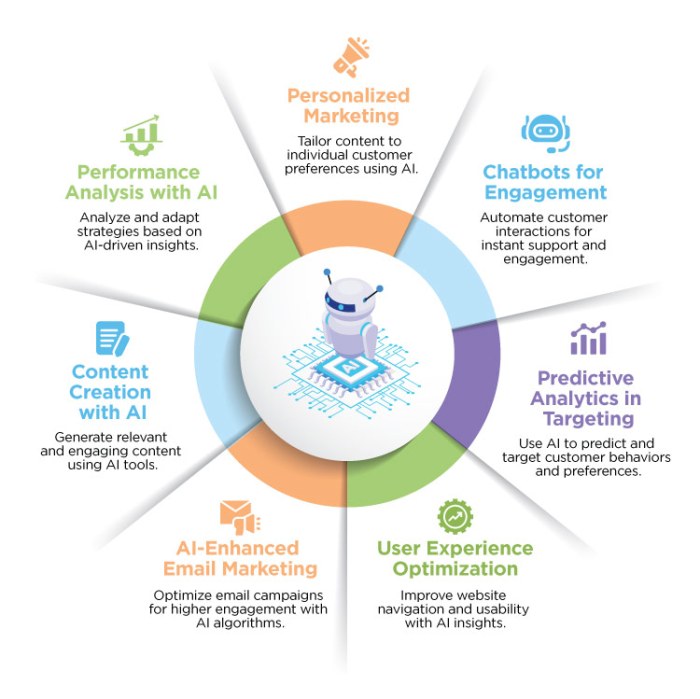
In today’s digital landscape, enhancing customer engagement is essential for driving conversions and building brand loyalty. AI-driven tools, such as chatbots and virtual assistants, have become critical assets in achieving these goals. They empower businesses to interact with customers in real-time, offer personalized experiences, and ultimately increase satisfaction levels.AI enhances customer engagement significantly through the automation of communication and support.
Chatbots and virtual assistants can handle a multitude of queries simultaneously, providing instant responses to customer inquiries. These AI systems analyze customer data to deliver tailored messages and suggestions, making interactions feel more personalized and relevant. By understanding customer behavior and preferences, AI can also predict future needs, allowing businesses to proactively engage with their audience.
Designing Engaging AI Interactions
Creating engaging AI interactions involves several strategies that prioritize customer satisfaction. Here are some methods to achieve this:
- Personalized Communication: AI can analyze customer data to offer personalized interactions, making customers feel valued and understood. For instance, sending personalized product recommendations based on previous purchases can enhance the shopping experience.
- Natural Language Processing: Utilizing NLP allows AI to understand and respond to human language more effectively. This results in more natural conversations, which can lead to higher customer satisfaction. For example, AI that can comprehend slang or colloquialisms provides a more relatable interaction.
- Proactive Assistance: AI can anticipate customer needs by analyzing behaviors, such as browsing patterns. Offering help before a customer asks can create a seamless experience. An example is a virtual assistant that initiates a chat when a customer spends too long on a specific page.
- Feedback Mechanisms: Incorporating ways for customers to provide feedback on their AI interactions can be invaluable. This ensures continuous improvement of AI systems and shows customers that their opinions matter. Regular surveys or post-interaction questions can help refine AI capabilities.
- 24/7 Availability: One of the primary advantages of AI is its ability to operate around the clock. Customers can get support anytime, which is particularly beneficial for businesses with a global audience or varied time zones.
Several companies have successfully leveraged AI to enhance customer engagement and loyalty. For instance, Sephora utilizes a virtual assistant called Sephora Chat, which helps customers find products, offers makeup tips, and even provides personalized recommendations based on previous interactions. Similarly, H&M employs chatbots to assist customers in finding clothing items, answering sizing questions, and providing styling suggestions. These examples illustrate how effective AI-driven engagement can lead to increased customer loyalty and enhanced satisfaction levels.
A/B Testing with AI Tools
A/B testing has long been a cornerstone of marketing strategies, helping businesses fine-tune their campaigns for optimal performance. With the advent of artificial intelligence, marketers can now leverage sophisticated tools that not only streamline the testing process but also enhance the depth of analysis. AI allows for faster decision-making and offers insights that were previously difficult to obtain, making it a game-changer for achieving high conversion rates.Incorporating AI into the A/B testing process can dramatically increase its effectiveness.
AI algorithms analyze vast amounts of data to identify patterns and predict outcomes, allowing marketers to make more informed decisions. Some key benefits of using AI for A/B testing include improved targeting of audience segments and real-time analysis of test results, which can significantly reduce the time it takes to implement successful changes.
Designing and Implementing A/B Tests Using AI
Effective A/B testing involves a systematic approach that can be significantly enhanced by AI. Here’s a step-by-step guide to designing and implementing these tests:
1. Define Your Objective
Clearly establish what you aim to achieve with the A/B test. This could be increasing click-through rates, improving user engagement, or maximizing conversion rates.
2. Select Variables to Test
Choose the elements that will be varied in the test, such as headlines, images, call-to-action buttons, or overall layout. AI can analyze past user interactions to suggest the most impactful variables.
3. Segment Your Audience
AI tools can help identify different audience segments that will receive either version A or B of your campaign. This ensures that the tests are relevant to your target demographics.
4. Create Variations
Develop the two versions of your marketing material, ensuring that the differences are clear and focused on the variables you have chosen to test.
5. Run the Test
Deploy both versions simultaneously to ensure that external factors do not skew the results. AI tools can manage this process, ensuring that the audience segments receive the correct version.
6. Analyze Results
After a predetermined time, use AI analytics to assess the performance of each version. Look for statistically significant differences in performance metrics to determine the winner.
7. Implement Learnings
Based on the results, implement the winning variation across your marketing channels. AI can help you continually refine this process by learning from each test.
8. Iterate and Optimize
A/B testing is an ongoing process. Utilize insights gained from each test to inform future experiments, leading to continuous improvement.
“The integration of AI in A/B testing not only enhances accuracy but also provides deeper insights into user behavior, making marketing strategies much more effective.”
Real-world examples illustrate the power of AI in A/B testing. For instance, an e-commerce platform utilized AI-driven A/B testing to optimize their email marketing campaigns. By testing various subject lines and offers, they discovered that personalized messages led to a 30% increase in open rates and a remarkable 20% boost in conversion rates. Another case involved a SaaS company that implemented AI to analyze user interactions on their website.
The insights gained from the A/B tests led them to redesign their landing pages, resulting in a 25% increase in sign-ups.By embracing AI tools in A/B testing, marketers can achieve higher conversion rates and develop a deeper understanding of their audience, ultimately leading to more successful campaigns.
Content Creation and Optimization with AI
Source: completeaitraining.com
The emergence of artificial intelligence has significantly transformed the landscape of marketing, particularly in content creation and optimization. Businesses are increasingly leveraging AI to produce high-quality content efficiently, ensuring that they capture the attention of their target audiences while maintaining relevance and engagement.AI plays a crucial role in generating and optimizing marketing content by automating repetitive tasks, enhancing personalization, and improving data-driven insights.
These capabilities enable marketers to focus on strategy and creativity, leaving the more labor-intensive elements to AI tools. By analyzing consumer behavior and trends, AI can assist in crafting messages that resonate with specific demographics, ultimately driving higher conversion rates.
Content Formats Benefiting from AI-Enhanced Creation
Various content formats can greatly benefit from AI-enhanced creation, as these technologies streamline the process and boost engagement. Here are some key formats:
- Blog Posts: AI tools can analyze trending topics and suggest relevant s, thereby aiding in optimization and content relevance.
- Social Media Posts: AI algorithms can determine optimal posting times and formats, ensuring maximum visibility and engagement.
- Email Campaigns: Personalization engines powered by AI can tailor email content to individual user preferences, increasing open and click-through rates.
- Video Content: AI can assist in scriptwriting and even video editing, allowing for faster production cycles without sacrificing quality.
- Ad Copy: AI can generate multiple variations of ad copy, enabling A/B testing to discover the most effective messaging.
AI Tools for Content Strategy and Creation, AI Marketing Strategies For High Conversion Rates
Several AI tools are available that streamline content creation and optimize marketing strategies. These tools empower marketers to enhance their content’s quality and effectiveness quickly. Some notable examples include:
- Jasper.ai: This AI writing assistant helps create blog posts, marketing copy, and social media content by generating human-like text based on user inputs.
- Canva: Leveraging AI, Canva allows users to design visually appealing graphics and presentations, enhancing the visual aspect of content creation.
- Grammarly: An AI-powered writing assistant that checks for grammar, punctuation, and style, ensuring that content is polished and professional.
- BuzzSumo: This tool uses AI to analyze content performance across platforms, providing insights that inform content strategy and topic selection.
- MarketMuse: A content research and optimization platform that employs AI to enhance content quality by suggesting relevant topics and s based on competitive analysis.
“AI is not just a tool; it’s a partner in the creative process, enabling marketers to produce content that is smarter, targeted, and more engaging.”
Measuring Success with AI Analytics
In the fast-paced world of digital marketing, tracking the effectiveness of your campaigns is crucial. When utilizing AI-driven marketing strategies, understanding metrics and key performance indicators (KPIs) becomes even more important. They provide the framework to assess how well your strategies are working, enabling data-driven decisions that can significantly elevate your marketing game.Metrics and KPIs serve as the foundation for evaluating the success of AI marketing strategies.
These quantitative measures inform marketers about customer engagement, conversion rates, and overall campaign efficiency. Relying on these metrics helps businesses identify what works and what doesn’t, allowing for adjustments and refinements in real-time.
Tracking and Reporting Methods for AI-Driven Campaigns
To ensure that AI marketing campaigns are effective, it’s essential to implement reliable methods for tracking and reporting their performance. The following methods can enhance your ability to gather valuable insights:
- Dashboard Analytics: Utilize platforms that offer comprehensive dashboards to visualize important metrics. Data visualization tools can simplify the interpretation of complex datasets.
- Attribution Models: Employ different attribution models to ascertain how various touchpoints contribute to conversions. This helps in understanding customer journeys more effectively.
- Real-Time Reporting: Implement tools that provide real-time data updates. This enables marketers to make swift decisions and adjust strategies on the fly.
- Customer Feedback Loops: Incorporate customer feedback mechanisms to gain qualitative insights along with quantitative data. This holistic approach can provide deeper understanding of customer preferences.
Each of these tracking methods plays a significant role in the overall evaluation of AI marketing campaigns, ensuring that marketers can pivot their strategies as necessary to maximize effectiveness.
Leveraging Insights from Analytics
Once you’ve gathered data from your AI-driven campaigns, the insights derived from analytics can be transformative for future marketing efforts. To make the most of this data, consider the following approaches:
- Data Segmentation: Segment your audience based on behavior patterns, preferences, and demographics. Tailoring your marketing strategies to these segments can enhance engagement.
- A/B Testing: Regularly conduct A/B tests to compare different elements of your campaigns, such as ad copy, images, or landing pages. This helps identify which variations yield the highest conversion rates.
- Predictive Analytics: Utilize predictive analytics to forecast future trends and customer behaviors. This proactive approach allows marketers to stay ahead of the curve.
- Continuous Learning: Treat every campaign as a learning opportunity. Analyze what worked and what didn’t, using these insights to create even more effective strategies in the future.
By effectively leveraging analytics insights, marketers can not only fine-tune ongoing campaigns but also create strategies that are more aligned with their audience’s needs and preferences.
Ending Remarks
In summary, embracing AI Marketing Strategies For High Conversion Rates can significantly enhance your marketing efforts, leading to improved customer engagement and increased sales. By leveraging data analytics, personalization, and automation, companies can create more impactful campaigns that resonate with their audience. The future of marketing is here, and it’s powered by AI.
Frequently Asked Questions
What are AI marketing strategies?
AI marketing strategies involve using artificial intelligence tools and techniques to enhance marketing efforts, including data analysis, personalization, and customer engagement.
How can AI improve conversion rates?
AI improves conversion rates by optimizing marketing campaigns through data-driven insights, personalized experiences, and predictive analytics that anticipate customer needs.
What tools are used in AI marketing?
Common tools include data analytics platforms, customer relationship management (CRM) systems, content creation software, and automation tools that leverage AI capabilities.
How does personalization impact conversions?
Personalization enhances user experience by delivering tailored content and recommendations, which makes customers feel more valued and increases the likelihood of conversion.
What role does A/B testing play in AI marketing?
A/B testing allows marketers to experiment with different strategies using AI tools, helping to identify the most effective approaches for boosting conversion rates.